
Table-Talk: Invitation # 16
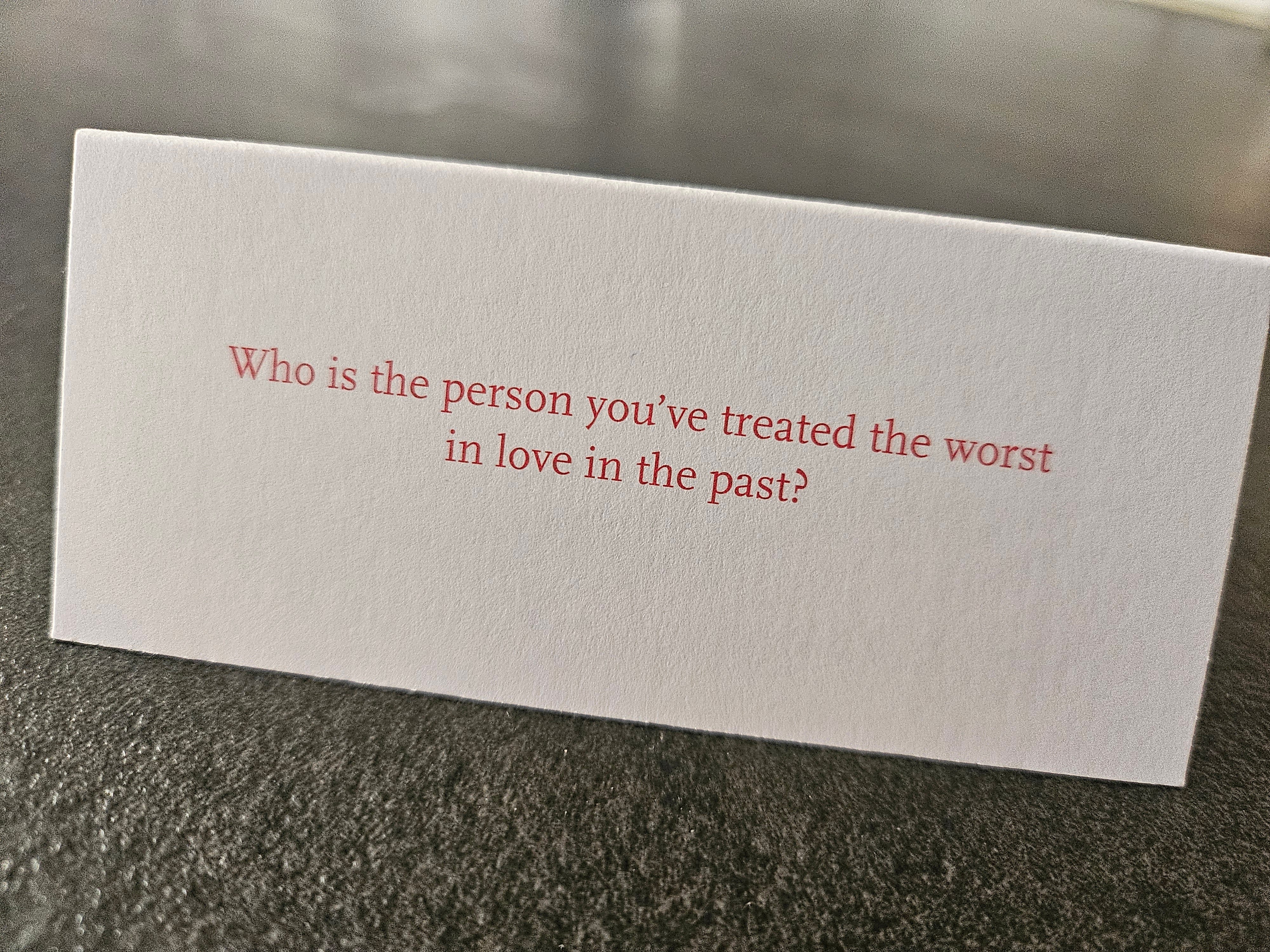
Who is the person.....

In the previous invitation, a group of enthusiasts attempted to rethink the institution of marriage. The boldest proposal was: “Every couple gets a parrot.” Personally, I would expand on that by suggesting that the parrot should be a talking one, to compensate for those awkward silences. I am sure every couple—married or not—is familiar with the difference between “enjoy the silence” and “awkward silence.”There was even an idea for a conference on the topic, albeit not a serious one, and the budget for this pet project is not sufficient to cover it anyway. Then there was also the little poll, not terribly representative, but still, a number of voters are leaning towards leave the good old marriage as it is. With that, after covering all the bases, we are closing the subject and moving towards the next, rather gossipy one:
As I have written earlier, I have a slight obsession with BBC detective series, and while conceptualising the answer of this question, I thought of one particular episode of Inspector Frost. Inspector Frost is a brusque, neurotic, charming—and, as it turns out, brilliant detective who has solved more mysteries than he can remember. In this episode Mrs. Hinkley comes to the police station looking for a stolen box of personal belongings. She is polite but persistent, and Frost—who is not known for his patience—sends that “sweet old lady” home with the promise that he will do his best. When the box is finally recovered, Frost is taken aback by its content: tasteful nude photographs of her as a young woman. Her simple answer was: “I wasn’t always old, you see.”


Why I remember this scene so vividly is not because of the nude photographs, but because she was not embarrassed by them. It was simply a gentle reminder that she, too, had once been young and perhaps a little frivolous, and that those photographs were precious memories of a time and a girl long gone. Following this train of thoughts, I find it rather odd and somewhat offensive that, at certain point in life, a woman loses her individual identity and become "a sweet old lady"; someone to be ridiculed and patronised. “I wasn’t always old.” generally means that one has done a lot of things over the years… I mean, really, a lot: things one might have enjoyed, things one might prefer to forget, things one might regret… and some things one definitely wouldn’t tell her children about.
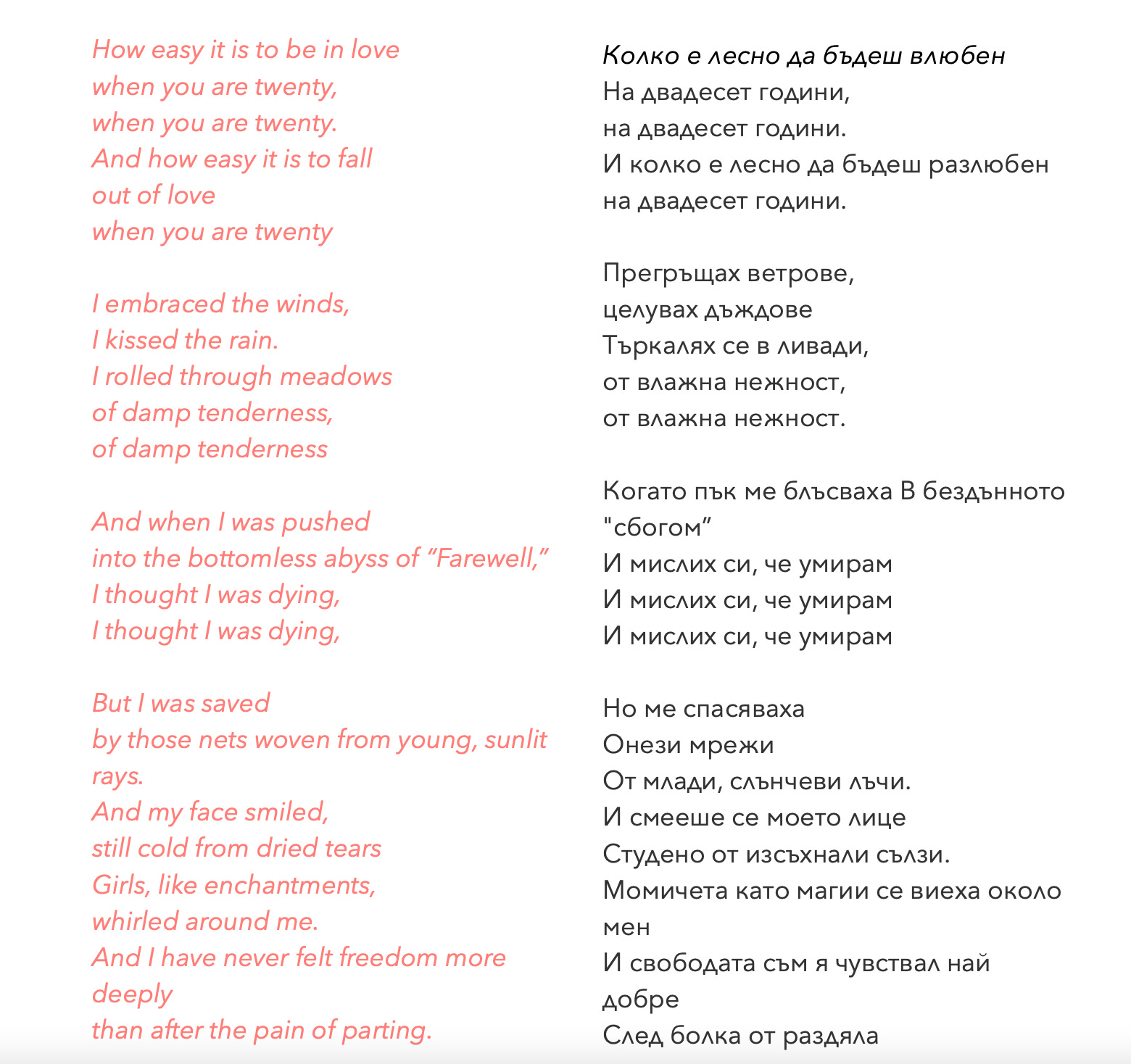
The bottom line is, when you are young, frivolities and love come easily, especially summer love: breezy, effortless, promising—as this beloved Bulgarian song from the 1980s beautifully sums it up.:
Without tears/Без сълзи1 (the clumsy attempt for translation is all mine)
In the mid- 1990s, I was in my twenties. As I have written before, 1990s were trying years, seismic changes in our society, chaos, inflation. A time of confusion and improvisation and one did what one could. I am a mountain girl, I knew the mountains, I could ski and spoke English…I became a ski-instructor in the winter, mountain guide in the summer and a student in between..I got few courses, few certificates, first aid training and I was ready to go.
The story I am going to tell is not about a “Flaubertian” kind of love, you don’t have those in your 20s… even if you think you are dying…It was more a summer crush on one side and a lack of sensitivity on the other. It began in one of those mountain huts, during one of my mountain-guiding adventures.


When you are in your 20s, you expect attention, you are used to it, you enjoy it, you miss it, you curse it. You can’t help it… vanity… it is human.
There is a brief moment, when a girl of 20 something enters a common room in a mountain hut, with a backpack almost as big as she is, wild hair and a face tanned by the sun. This girl is followed by about 12-15 very foreign looking people, and it quickly becomes clear that she is in charge. At that very moment, the room falls silent for a few seconds, and she savours every one of them although there are at least ten things, already rolling in her mind:
Thanks GOD we made it today and no one got injured (after 5-6h walk on about 2000m altitude).
I am not going to think about tomorrow…not just yet. But tomorrow is already at the back of my mind because it is the most spectacular hike of the week (see the picture above), and we have to set off at 5:30 am sharp.
I have to check the weather forecast for tomorrow.
I have to inspect the sleeping quarters for the group, and see whether they can at least have a cold shower and some tea before dinner.
I have to ask the cook to make something for the three vegetarians for dinner. (Probably grilled cheese again.)
I have to make sure B. gets a bed somewhere, because B.'s personal hygiene is questionable and the people of group don't want to share a bungalow with him..
Don’t think about the lingering migraine…get some Saridon and carry on.
Apologise to the tourists about the state of the toilets. “Yes, I know, I am rally sorry. but there is nothing I can do about them”.
I have to find a few quiet moments and space to count the money and pay the hut manager, who keeps circling around me as though I had forgotten. (All the cash for the group's accommodation and food is in an ugly money belt around my waist. I am basically a walking bank. I can’t leave it for even a second and thankfully I have a room on my own)….
And I have to send a message to my parents over the radio telephone to let them know all is well. (There were no mobile phones back then.)
So that is the reality inside the mountain guide's mind. But those few moments, when she walks into a room full of strangers, the conversations stop and everyone is looking at her is her “YES” moment. It is not about her showing off. It is about the quiet authority that she projects, the authority that evokes in those strangers both admiration and envy. She knows what they are thinking. Some are wondering, “How dare she be so shamelessly confident?” Others are thinking, “Who does she think she is?” Some make loud remarks: “There is food for those tourists, but not for us.” Others comment bluntly “..she is a cute little kitten, isn’t she..”. She feels the wet looks following her…and ignores them, she has work to do…besides, she is used to all of that. It is the same in every mountain hut. She knows that many will approach her later …ask her questions, how she got THAT job…or where did she got THOSE walking shoes..There will be again men twice her age asking her in which bungalow she is sleeping. Others will start following her group on the trail the next day, looking for an opportunity to get closer to the “foreigners” to practice their English…or so they say. She has learned to balance the delicate lines between being confident, being friendly, being flirty, and being careful. She has to sense exactly when it is time to draw a firm line and lock her door at night.
But those evenings in the mountain huts are also a lot of fun. After the first awkward moments, after all the arrangements have been made, B. has finally got a bed, and everyone is quietly writing in their journals, the mountain guide can relax a little, have some time to herself, or socialise with the other hikers. There are guitars, and singing on candlelights. All of sudden the common room has a great sense of conviviality2. People talk about routes and peaks they have climbed or plan to. There is, of course, a little harmless flirting. They say every guy becomes instantly attractive, if he holds a guitar. So the guy I am going to call N., was in his late 20s, played the guitar and was, at the candlelight, good-looking in a tragic, nonchalant Kurt Cobain way. He was part of a large group from one of the big seaside towns. As a unwritten rule, we the mountain people would spend two weeks on the Black Sea coast in the summer, while the people from the coast would spend two weeks in the mountains. We were not natural swimmers, and they were not natural mountaineers, but it was always fun to compare notes. And while everyone was comparing notes, singing, and playing music, N. clearly developed a particular interest towards the mountain guide and made that clear. The mountain guide was flattered, but she was also firm and at one point decided it was time to draw a line and lock her room. The next morning was an early start. If the group had to set off at 5:30 am, the mountain guide had to be awake by about 4:30 to listen to the weather forecast and pack everyone’s breakfast into individual bags. And, surprise, surprise... there was someone else awake in that early crisp morning: N., (without his guitar), had come to say goodbye, and while helping packing breakfast, casually asked for her phone number. Can anyone resist that? So life and hiking goes on. The next hut, the next common room, a few seconds of silence, arrangements to be made, candlelights... and then the trip is over.


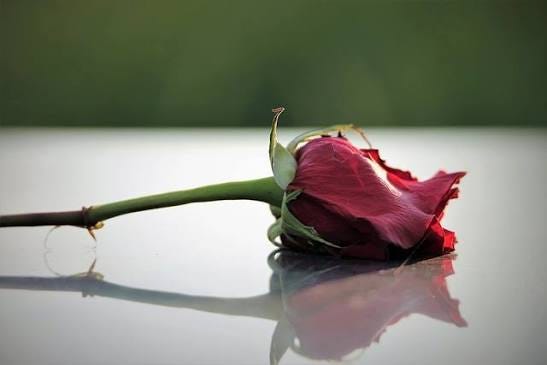
The mountain guide is back in her flat and soon starts receiving daily phone calls from N. She is not really interested. N. lives 600 kilometres away, she has no plans to start a distant relationship. She has her life, studies, exams, friends. But she is young, feels flattered and doesn’t have the heart to tell that gentle guy from the seaside to stop calling. Then one day, he decides to surprise her… again. He takes the night train and arrives in Sofia one early crisp morning. She has only just woken up, still in her pyjamas, drinking her morning coffee and planning to study for the exams she had postponed because of the work. She isn’t happy about the surprise, but has to pull herself together and go and pick the poor guy up from the station. She gets there, late, grumpy and annoyed, and doesn’t hide it. The guy that was waiting is a “water reflection” of N. with the guitar by the candlelights. He is paler, shorter, lost inside an oversized autumn jacket, no Kurt Cobain vibes... But he looks happy. He is smiling, and is carrying a single sad looking red rose. The mountain guide knows instantly that there is no way of bringing this guy home. So she offers to show him around the city instead. It is a misty, chill autumn day, not exactly a day for sightseeing, but they keep walking, he keeps talking. She is wondering whether she can somehow leave him with someone else, ask a friend to take over. But you can’t just dump him to a friend…they don’t know him anyway. So she does her bare minimum to compose herself. She thinks that they have nothing in common, and even if they have, she has no patience or intention to find that out. After hours of walking and litres of coffee, he wants to take her to dinner. She says she needs to go study, but he insists, telling her that he is very curious to eat at one of the two fast-food chains that have just opened “restaurants” in Sofia. They still don’t have either of them in his hometown. She looks at his happy face as he carries a plastic tray with boxes and paper cups. He looks like an unnaturally grown child. The food tastes weirdly comforting. The conversation fades away. She feels deflated and just wants to go home. She doesn’t even ask him if he is going to spend the night in Sofia.
Heartless.
She walks him back to the station, assuming he will be taking a train back home. When she finally gets home, she tosses the very desperate-looking rose on the shoe cabinet. Her flatmate rescues it, puts it in a vase of water, and tells her she has been cruel. The mountain guide replies that she is simply tired and goes to bed. She wakes up shivering with stomach flu. Her flatmate, a fourth-year medical student, says it is salmonella. It could have been, but whatever it was, it was bad—one of the worst gastrointestinal infections she remembers. She has totally forgotten about N., and he doesn’t call. But a few days later, N. calls again. She tries to be composed and polite and says she has been a bit unwell. She asks him where he spent the night in Sofia.
“On a bench at the station,” he says.
She doesn’t know what to say. There is a distant jolt of guilt. But what could she have done? She hopes he didn’t get stomach flu too but prefers not to ask. He doesn’t mention it. The conversation hangs in the air.
“I’m sorry,” she finally says. “I had no idea. I thought you had a room in a hotel.”
In the end, she tells him that it would be better if he stopped calling because she needs to focus on her exams. He persists. He invites her to visit him in his seaside town. But it is autumn. Nobody goes to the seaside in autumn. Eventually, she stops answering his calls. Eventually he stoped calling.
And that, my friends, is the end of the story. Whether I remember this guy because of the stomach flue, or I remember the stomach flue because of the guy, I don’t know. That will remain in the realm of the “Theory of Simultaneity”3 ….
…and I have no idea what happened to N. I hope he is well and happy. I hope he found his “true love”, I hope it was just an innocent summer crush, light as a breeze, even if, at the time, he thought he was dying.
I realise I come across as a rather unlikeable character... and perhaps I was. In fact, I didn’t handle the situation with any sensitivity. I was probably very selfish, too. But honestly, can anyone say they have never dismissed, ignored, or been insensitive when dealing with unwanted attention? I also wonder whether rejecting someone can ever truly be kind. Would the fashionably boring and absolutely unimaginative “It’s not you, it’s me“ have made any difference?
All the same, a rejection is a rejection. For all her gentleness he went from her with a lame soul, and angry.
The Dispossessed, Ursula K.Le Guin (1974)
As time went by, life punched me with few rejections, too. Eventually, we all experience rejection; that is simply how life and love works. One moment you are the one doing it, the next you are on the receiving end. And when you are the one being rejected... you think you are dying.
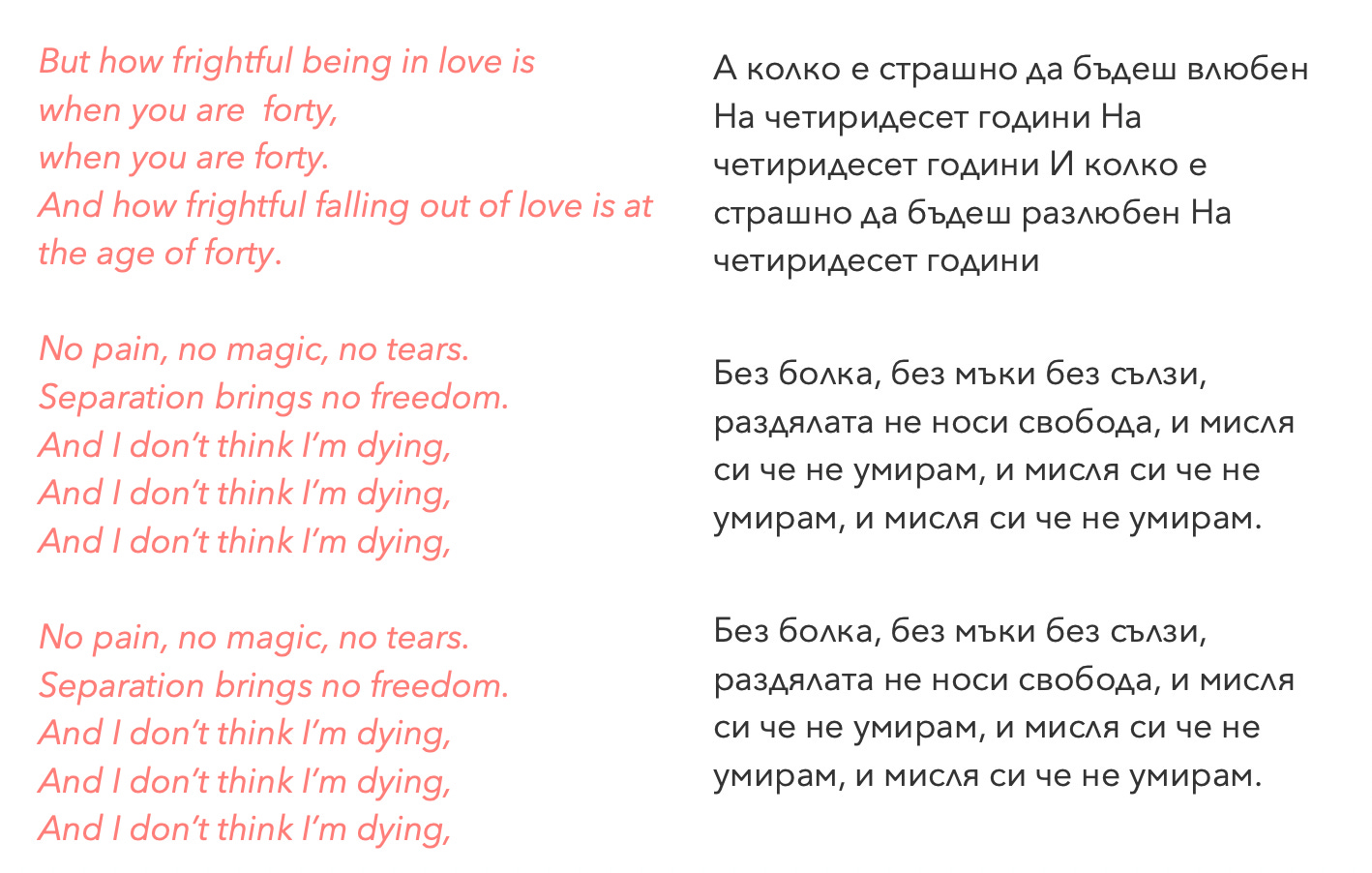
.….and yet, life and the song goes on:
I am not going to ask you the above question, it would be rude, but I will be happy to hear your thoughts on:
Can rejecting someone ever be kind?
Music by Nayden Andreev, lyrics by Lyubomir Levchev, performed by actor Stefan Danailov
A warm, festive atmosphere tied to sharing food, drink, and good times. Learned this word yesterday and decided to use it immediately :-)
Theory of simultaneity is a revolutionary physics concept developed by the protagonist, Shevek in Ursula K.Le Guin’s The Dispossessed, (1974). She was inspired by the work of Einstein.
This is a wonderfully written story. Your writing is a genuine gift to us, your readers, and I’m grateful for it. As I was reading, I kept picturing the different scenes, or reconstructing memories of my own that somehow resembled them. And, more generally, I found myself remembering what it feels like to be in a mountain hut more than 2,000 metres above sea level, with no electricity, and yet having an absolutely wonderful time.
And the big question of whether it is possible to reject someone in a way that doesn’t hurt really is a big one. I don’t think it can be reduced simply to finding the right words that will make rejection less painful. There is another side to it as well: if it didn’t hurt very much, were the emotions real? Were they strong enough? And could rejection itself, in some strange way, sometimes turn out to be a gift or even a blessing? Difficult questions.
In general, I like trying to shed some light on things that are harder to notice, and it seems to me there is an opportunity to do that here too. What I mean is that making rejection less painful also involves the person being rejected. We need a certain maturity and an ability to prepare ourselves, to find the strength within ourselves to overcome the pain and perhaps even turn it into a source of energy, rather than surrendering to the strange comfort of seeing ourselves as victims.
We also need to learn to judge when a relationship genuinely has a chance - which is incredibly difficult and can create the opposite problem, of course: never beginning relationships that might actually have worked - and when to follow, or restrain, the impulses of the heart. We cannot rely entirely on the other person somehow finding the perfect formula for rejecting us in a way that will hurt less than it otherwise would.
There is a book by the French philosopher Michel Foucault called The Courage of Truth - actually the book is based on the final course of lectures he gave at the Collège de France. Among other things, it teaches us that courage is required both to speak the truth and to bear the truth when we hear it. And it seems to me that these are qualities that can help us in far more than one area of life: to tell the truth, and to learn how to live with hearing it.
And one more thing: I think you are being too hard on yourself. I would probably feel exactly the same way in your place, but I also think - and believe - that it is precisely these mistakes, doubts, and difficult questions that give us the opportunity to work on ourselves and become better people.
And if that is true, then perhaps there is a small paradox here: in order to become kinder, more compassionate, more understanding people, we may first have to travel some distance in the opposite direction.
This was an amazing read, Lilia. I was right there with "the mountain guide" (such effective use of the third person perspective imo), and the life in our twenties you conjured—rejecting and being rejected, and remembering how it all felt (omg).