
Table-Talk: Question # 11
What sort of people.....

The previous question was about what make us proud of ourselves, and the consensus seems to be that it is not alway about our biggest achievements but perhaps the ability just to show up on a rainy day, the ability to keep walking in the mud. Some times small steps matter as much as the big ones.
For today’s question, I am going to experiment a bit, bare with me.
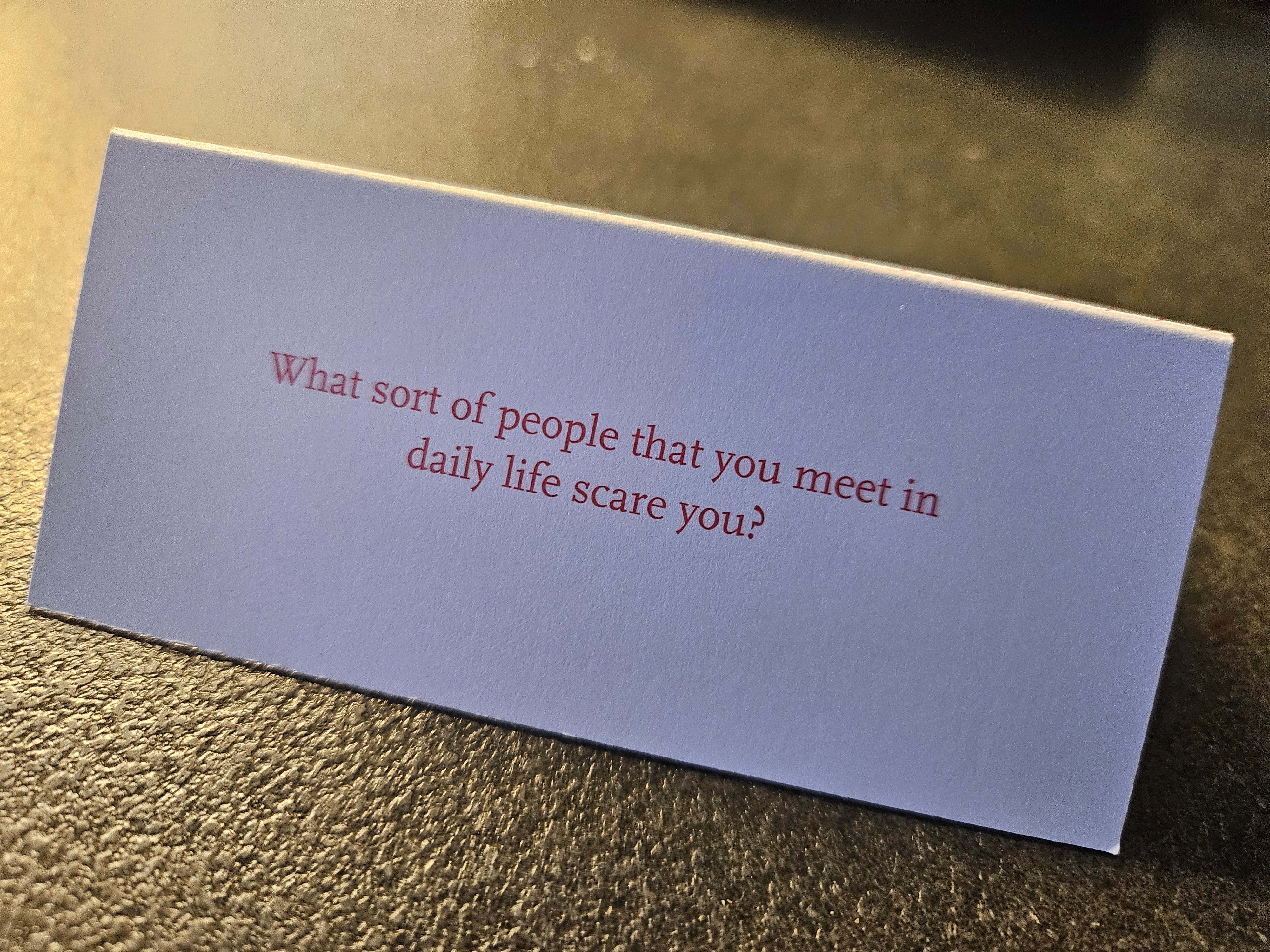
Don’t people who seek violence to solve problems, people who are cruel and arrogant simply because they can be scare you? They scare me.
Don’t people who hate for the sake of hatred alone scare you? They scare me.
Don’t people who loudly shout that “kindness doesn’t get you anywhere,” and that only strength, power, money and blind ambition matter, scare you? They scare me.
Don’t people who dismiss kindness and compassion as weakness scare you? They scare me.
And if we look around, at the state of the world today, we can easily recognise who those people are. But I don’t want to write about those people. Instead, I want to write about a few types of people with more subtle and seemingly harmless characters, the kinds of people we actually meet in our everyday life who scare me.
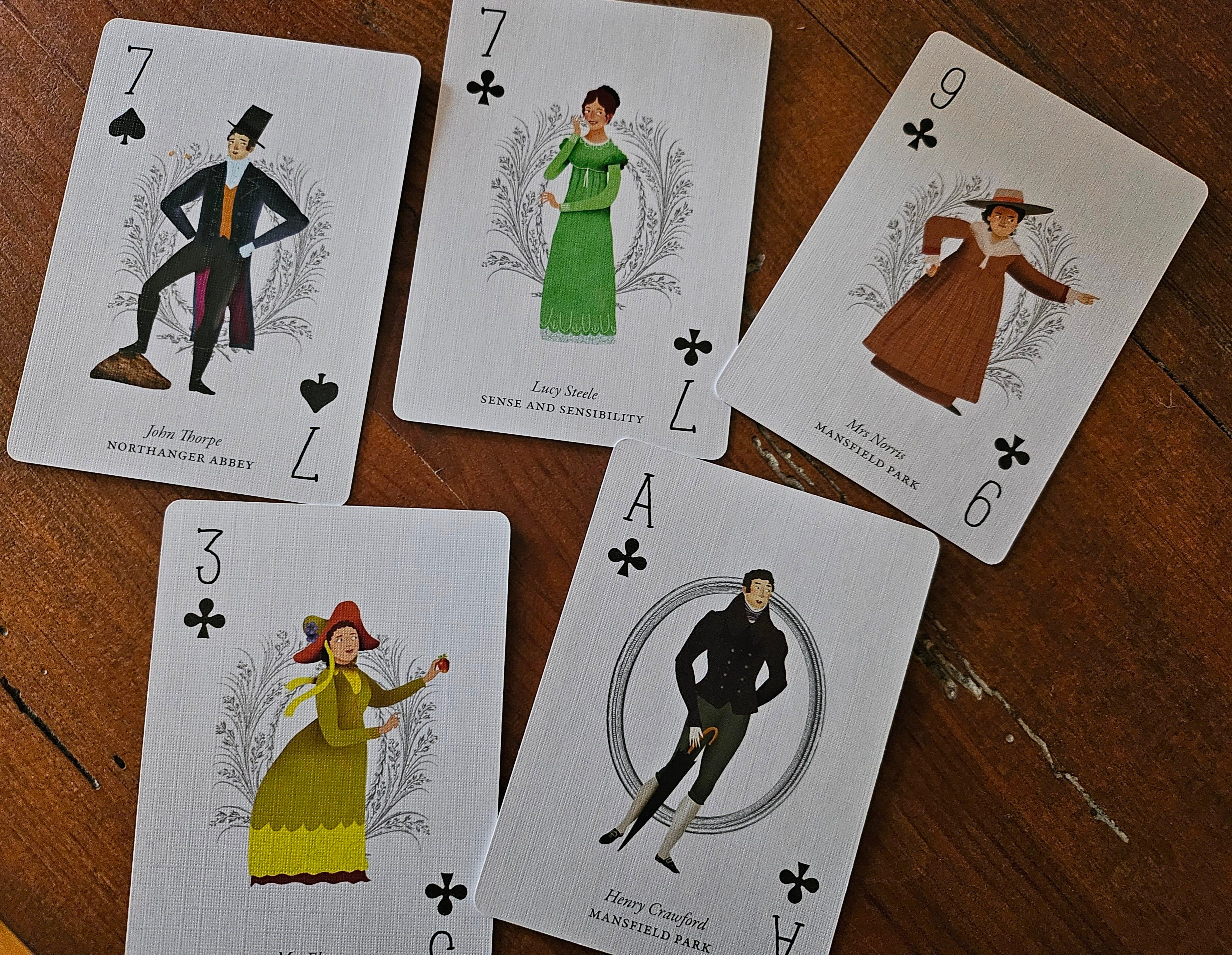
To do that, I will use a few fictional characters created by Jane Austen. They are fictional, yes, but instantly recognisable: at work, on the street, in the plane, even in a close circle of family and/or friends… just pay attention, and you will notice them. This is the great talent of Jane Austen: her ability to create characters who feel completely real, even more than two hundred years after she wrote them. They are recognisable human beings with flaws, contradictions, vanities, kindnesses, insecurities, and small absurdities. And some of them stand out as exactly the sort of people I would rather not have to deal with in real life.
Meet John Thorp
“Nobody drives faster than I do.” Northanger Abbey, Jane Austen, 1817


John Thorpe is probably my absolute favourite because he can so easily be “teleported” into modern times. Just change his horses and carriages with cars and gadgets …He is the sort of man who walks into a room already convinced he is the most fascinating person there. He talks endlessly about himself, his horses, his carriages, and basically anything that might make him sound important. Most of it is exaggerated or totally invented, but that never seems to bother him. He does’t listens, he is always “right”, and has the charisma and sensitivity of a shrimp. He pushes people around, every conversation for him is a sort of “one-man show”. He is very much the “I know everything, and you know nothing” type of person. What makes him hilarious but terrifying is how familiar he still feels today. We all know a John Thorpe: the person who mistakes confidence for volume and bragging for charm. I am quite sure you have met him more than once. Nowadays, he would probably have a podcast, and call himself an “alpha male,” explaining life to people who did not ask for his explanation.
Meet Lucy Steele
“Lucy was naturally shrewd.” Sense and Sensibility, Jane Austen, 1811


Lucy Steele is that friend. The kind of friend who smiles so sweetly at you that it takes a while to realise that actually she is sly and very calculating. She is never dramatic or openly unpleasant. Quite the opposite, she is polite, charming, and always seems to know exactly the right thing to say, which is exactly why she feels a so suspicious. Lucy is a master manipulator and knows how to flatter whomever she believes she can benefit from. She plays innocent on the surface, but somehow manages to make every situation work in her favour. She looks harmless, but underneath all the sweetness is a very determined and calculating mind.
Most of us have met a Lucy Steele: the person who is soooo happy to see you, but who will never call unless she needs something from you. The kind of person who could steal your dessert and somehow make you apologise to her for even mentioning it.
Meet Mrs Norris
“Nobody loves a bustle better than Mrs. Norris.” Mansfield Park, Jane Austen, 1813


Mrs. Norris creates the illusion that she is making huge sacrifices for everyone, even when she does absolutely nothing. She is always interfering in other people’s lives, giving advice nobody asked for, and reminding everyone how helpful she is while someone else is doing the actual work. She thinks of herself as practical, moral, and generous, but in reality she is controlling, incredibly mean and petty. A borderline bully. She seems to enjoy making Fanny Price (main character of MP) feel small, constantly criticising her and reminding her to “know her place.” The quote below illustrates perfectly how she feels and acts towards Fanny:
“...but she was more angry with Fanny for having received such an offer, than for refusing it. It was an injury and affront to Julia, who ought to have been Mr Crawford’s choice; and, independently of that, she disliked Fanny, because she had neglected her; and she would have grudged such an elevation to one whom she had been always trying to depress.”....Mansfield Park, Jane Austen, 1813
Mrs. Norris is just unbearable because she truly believes she is a wonderful person. But in reality she a the person who keeps track of every tiny favour they have ever done for you and will keep reminding you about that. She also somehow manages to make herself look like the victim in every situation.
Meet Henry Crawford
“He loved to make women pleased with him.” Mansfield Park, Jane Austen, 1813


Whether it is Crawford or Willoughby or even to some extend Wickham...they are all more or less the same: charming, relatively rich "bad boys", who feel generally speaking entitled. They “concur” women for their own amusement..I decided to go after Henry Crawford particularly because of his “calculated” cruelty. He is no doubt charming, witty and clever which is exactly what makes him so dangerous. He knows how to make people laugh, how to flatter them, and how to become the centre of attention without trying too hard. He is a natural charmer...The problem is that Henry treats life, and especially other people’s feelings, as a form of entertainment. He enjoys admiration, enjoys being desired, and becomes bored the moment things start to get serious. Much of his behaviour feels like a game. He is unsettling because there are moments when he seems capable of becoming a better person. Even Fanny begins to see qualities in him that suggest he could evolve into a better person. But Henry …Henry follows impulse, vanity, and the pleasure of being admired. He is not cruel in an obvious way, or foolish like John Thorpe. He is intelligent enough to understand people and charming enough to win them over, but he can not be trusted. Make sure your daughters recognise him and stay away form guys like him ;-)
Meet Mrs. Elton
“Mrs. Elton was a vain woman, extremely well satisfied with herself...”, Emma, Jane Austen, 1815


Ah….Mrs. Elton…she is hilariously annoying. Mrs. Elton believes that she has been put in charge of absolutely everything. She is loud, she is self-important, convinced of her own sophistication and charm. She constantly name-drops, boasts about her “connections,” and gives advice with the confidence of someone who is sure that your life would improve if you only listened to her. She has this “I am the standard” attitude. She sees herself as elegant, generous, and brilliant, while everyone around her is trying to avoid her. She has the energy of someone who organises a group activity nobody wanted and then expects applause for “bringing everyone together.” You must have met a Mrs. Elton: the person who talks endlessly, gives advice nobody requested, insists they are “only trying to help,” but turns every occasion into their own personal performance.
I could go on and on, but I will stop here. I think I have illustrated well enough the sort of people I try to avoid in real life. For Jane Austen lovers, let me know if I have missed or misunderstood something about these marvellous characters. For everyone else, I hope I have at least sparked some interest in these wonderful (my personal favourite) books.
Now is your turn:
Who are the sort of people you try to avoid in your daily life?
Can you think of a book character to illustrate the sort of people you try to avoid in your daily life?
Wonderful! Jane Austen does the best baddies. Enjoyed this list! 📚💙
Few writers better understood people than Austen. John and Fanny Dashwood are also a very real type of person (unfortunately) that I've seen: someone who has enough resources to be generous but instead, is cold, selfish, rationalizing and almost paranoid.
I think the table-talk question itself is interesting. The word "scare" certainly conjures dramatic imagery, but as you intuited, that's not how most of real life is. At least for me, most people aren't scary once you try to understand them -- they may still be unfortunate or repellent, maybe even more so, but the understanding empowers you to better know how to handle or avoid them. Or, like Jane Austen, teach others how to better recognize them. :)